The AI Experience Architect
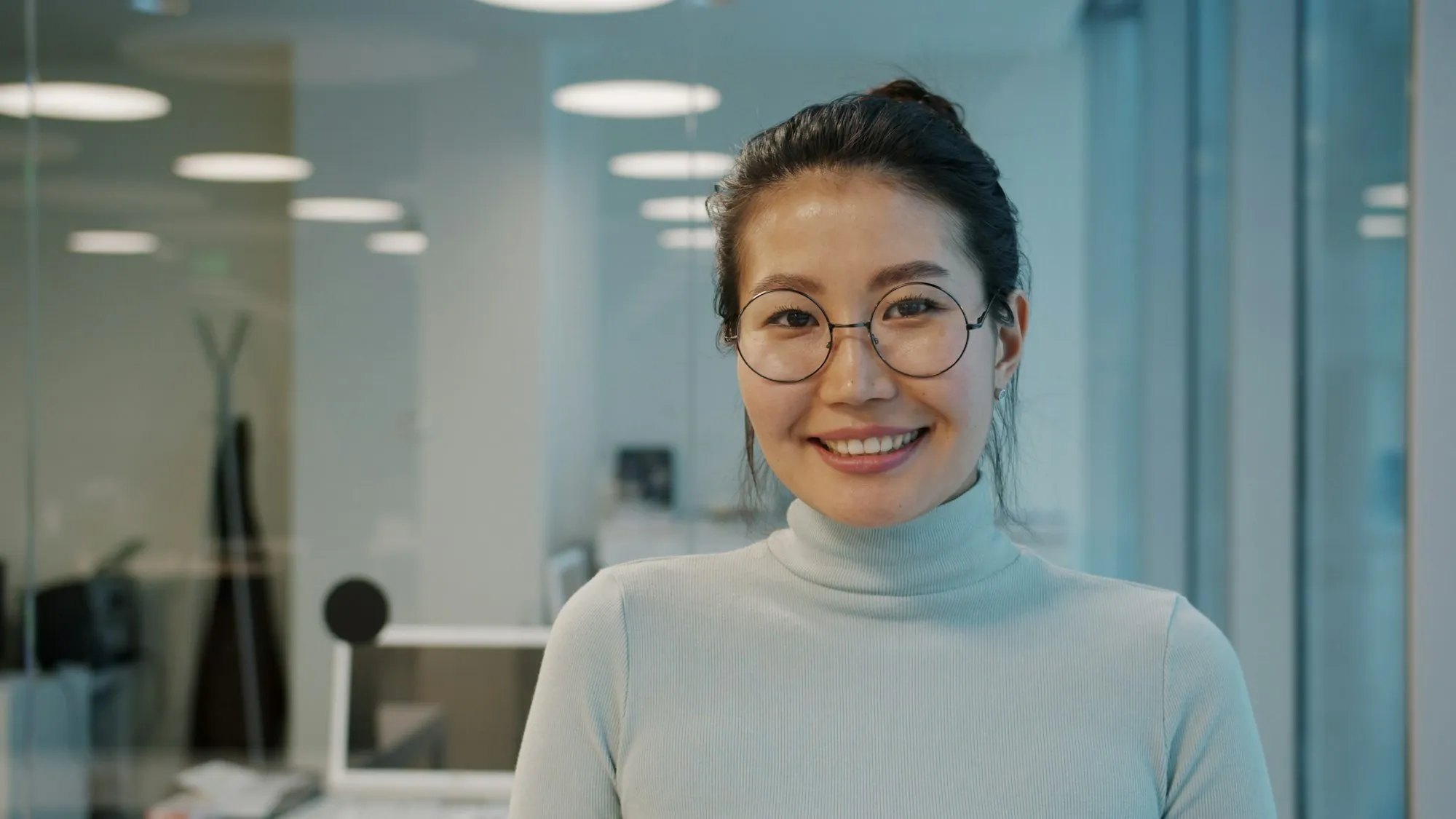
Sarah Chen arrives at her home office in Portland at 8:30 AM on a Tuesday morning in 2030. As an AI Experience Architect for a digital health company, her job didn’t exist six years ago. Yet today, she’s one of the most crucial people in her organization’s product development process. Her role represents the evolution of what used to be called a Product Owner or Product Manager , but the transformation is so complete that the old titles no longer fit.
Sarah doesn’t manage feature lists or write requirements documents the way her predecessors did. Instead, she architects experiences by defining human needs in ways that both people and AI systems can understand and act upon. She’s part psychologist, part systems designer, part AI translator. Her superpower is the ability to bridge the gap between what users actually need and what AI can help create.
The morning starts with a message from the customer success team. Users are struggling with the medication reminder feature in their health app. In 2024, this would trigger a months-long process of user research, design iteration, development, and testing. But Sarah works differently.
She begins by diving into the user feedback, not to create requirements, but to understand the underlying human need. The surface complaint is that reminders come at inconvenient times. But Sarah recognizes a deeper issue: the system doesn’t understand the rhythms and routines of people’s actual lives. A reminder that pops up during a morning commute is useless. A reminder that appears just as someone sits down for breakfast might be perfect.
This is where Sarah’s role becomes crucial. She needs to translate this human insight into something AI can work with. She opens her experience modeling tool and begins crafting what she calls an “intent map.” This isn’t a traditional requirements document full of bullet points about features and functions, but instead a structured representation of user needs, contexts, and success criteria that AI systems can interpret and act upon.
The intent map for the medication reminder improvement looks something like this in her system, though she works with it through a visual interface that makes the complexity manageable.
She defines the core user intent as “seamless medication adherence that fits naturally into daily life.” This might sound like marketing speak, but every word is carefully chosen. “Seamless ” tells the AI to minimize friction. “Adherence ” focuses on the outcome rather than the feature. “Naturally ” suggests adaptation to individual patterns. “Daily life ” emphasizes context awareness.
Next, she maps the emotional journey users experience around medication. The anxiety of forgetting. The annoyance of unnecessary interruptions. The satisfaction of maintaining a streak. The confidence that comes from being in control. These emotional markers become design constraints that AI will need to satisfy.
She then defines what she calls “context triggers” which are the real-world situations that should influence how the feature behaves. Morning routines. Meal times. Bedtime rituals. Work schedules. Weekend variations. Travel disruptions. Each context has associated patterns that AI can learn to recognize and respond to.
The success metrics she establishes are more than traditional measurements. Yes, she includes medication adherence rates and app engagement statistics. But she also defines experiential metrics: time from reminder to action, user-reported convenience scores, reduction in medication anxiety. These help AI understand whether it genuinely improves people’s lives.
What makes Sarah exceptional at her job is her ability to think systematically about human experience. She considers the happy path where everything works perfectly. She maps edge cases and failure modes. What happens when someone’s routine completely changes due to illness or travel? How does the system help someone get back on track after missing several doses? How does it handle medications with complex timing requirements?
This systematic thinking extends to different user segments. A retired person has different patterns than a shift worker. A parent juggling children’s schedules faces different challenges than a single professional. Instead of creating separate requirements for each segment, she defines adaptation principles that AI can apply intelligently to individual situations.
By 10 AM, Sarah has completed her intent map. In the old world, this would be the beginning of a long journey. She’d hand off requirements to designers who would interpret them one way. Designers would hand off to developers who would interpret them another way. Months later, something would ship that vaguely resembled the original intent.
However, Sarah works in an AI-native process. She feeds her intent map directly into the company’s AI design system. Within minutes, the AI generates three different approaches to solving the medication reminder problem. Each approach interprets her intent map differently, exploring various ways to balance the defined constraints and optimize for the specified outcomes.
The first approach uses predictive modeling to learn individual routines and suggest optimal reminder times. The second approach lets users explicitly connect reminders to existing habits like brewing morning coffee. The third approach uses social dynamics, allowing family members to support each other’s medication adherence. All three solutions respect the emotional journey she mapped and the context triggers she defined.
Sarah reviews these AI-generated solutions as thought starters. She recognizes elements in each that address different aspects of the user need. Working with the AI, she begins combining and refining ideas. She might take the predictive modeling from the first approach but apply it to the habit-stacking framework of the second. She might add the social support features as an optional enhancement rather than a core requirement.
This iterative dialogue with AI is a crucial part of her role. She’s engaged in a creative conversation, pushing the AI toward better solutions while remaining open to possibilities she hadn’t considered. When the AI suggests using phone sensor data to detect daily patterns, she recognizes both the potential value and the privacy concerns. She refines the intent map to include privacy as a core constraint, and the AI adjusts its approach accordingly.
By lunch, Sarah has a refined solution that she’s ready to validate. Validation in 2030 doesn’t mean scheduling user research sessions for next month, though. She uses AI-powered simulation to test the solution with synthetic users based on real behavioral data. The simulation reveals that the habit-stacking approach works well for routine medications but fails for medications taken as needed. She adjusts the solution to handle both cases.
The afternoon brings a different challenge. The company’s CEO wants to add a social feature where users can share their medication adherence achievements with friends. In 2024, this kind of executive drive-by would derail months of work. But Sarah has tools to handle it effectively.
She creates what she calls a “feature impact assessment” using AI to simulate how the social sharing feature would affect the core medication reminder experience. The simulation shows that mandatory social features would actually decrease adherence for privacy-conscious users. But optional, subtle social features might increase adherence for users who opt in. She presents this data to the CEO with concrete projections of user impact, and they agree on a balanced approach.
This evidence-based negotiation is another crucial aspect of Sarah’s role. Even though she is a translator between humans and AI, she’s also a diplomat between different stakeholder interests. The AI gives her the ammunition to have fact-based conversations rather than opinion-based arguments. When the head of engineering says something will take too long, she can show AI-validated alternatives. When marketing wants to add complexity for differentiation, she can demonstrate the user experience cost.
As her day continues, Sarah collaborates with other members of the AI-native team. She works with Marcus, the Vision Conductor, to ensure the AI-generated designs capture the right emotional tone for the health app. She coordinates with Anna, the Design System Guardian, to ensure new patterns integrate smoothly with existing components. She reviews technical validation results with James, the Integration Validator, to confirm the solution will work reliably in production.
This collaboration is fluid and continuous rather than sequential. Everyone can see and comment on the evolving solution in real-time. The traditional game of telephone that plagued old development processes has been replaced by a shared understanding maintained through AI-mediated artifacts that everyone can interpret from their own perspective.
By the end of the day, Sarah has taken a user problem from identification to validated solution ready for development. The entire process took eight hours instead of eight weeks. But more importantly, the solution is better than what traditional processes would have produced. It’s more thoughtful about edge cases, more responsive to different user needs, and more technically sound from the start.
The skills that make Sarah effective in her role go far beyond technical knowledge. Yes, she understands how AI systems work and what they’re capable of. Her real value comes from deeper capabilities that AI can’t replicate.
She has profound empathy that lets her understand not just what users say they want but what they actually need. She recognizes the grandmother who’s intimidated by technology but determined to manage her health. She understands the busy parent who needs solutions that work amidst chaos. She feels the frustration of the chronic illness patient who’s tired of systems that treat them like a set of symptoms rather than a whole person.
She possesses systems thinking that lets her see how individual features connect into complete experiences. She understands that a medication reminder isn’t an isolated function but part of a broader health management journey. She recognizes how changes in one area ripple through the entire product ecosystem. She can hold complex, interconnected systems in her head and reason about their behavior.
She brings strategic judgment that helps her make trade-offs between competing goods. When user privacy conflicts with useful features, she finds creative compromises. When business needs clash with user needs, she negotiates solutions that serve both. When technical constraints limit ideal solutions, she identifies acceptable alternatives that preserve core value.
These human capabilities become more valuable, not less, in an AI-powered world. The AI can generate solutions faster than any human, but it needs human wisdom to guide it toward solutions that truly serve human needs. The AI can optimize for defined metrics, but it takes human judgment to know which metrics actually matter.
The transition from traditional Product Owner to AI Experience Architect centers on developing new ways of thinking about product development. Instead of managing features, you’re architecting experiences. Instead of writing requirements, you’re defining intents. Instead of sequential handoffs, you’re orchestrating parallel collaboration. Instead of accepting trade-offs between speed and quality, you’re achieving both through intelligent human-AI partnership.
For current Product Owners and Product Managers looking to evolve into this role, the path forward starts with mindset shifts. Stop thinking about features and start thinking about experiences. Stop writing requirements and start mapping intents. Stop managing handoffs and start orchestrating collaboration.**** Stop choosing between speed and quality and start achieving both through AI partnership.
The tools Sarah uses will continue evolving rapidly, but the core capabilities she brings will remain essential. Empathy, systems thinking, and strategic judgment can’t be automated. They can only be amplified. The AI Experience Architects who thrive will be those who best combine these human capabilities with the power of AI assistance.



Comments